Moral reasoning is the ability a person has to reason in and through social, ethical, and emotional situations. One component of moral reasoning is moral behavior, which is the intentional and voluntary acting in a prosocial manner (Walker, 2004). Moral behavior and reasoning are the foundation for “many human social and cultural institutions such as family structures, legal and political government systems that affect the lives of virtually every person” (Eslinger, Flaherty-Craig, & Benton, 2004, p. 100). Often situations in life are morally ambiguous and involve a choice between two actions that both have consequences that may or may not be in opposition to each other. Some researchers, such as Lawrence Kohlberg, believe that people will reason through these situations at varying levels or stages, with some in a very concrete and egotistic manner and others in an abstract and universal manner.
Lawrence Kohlberg was the first researcher to come up with a major testable theory of moral development. He formulated six stages of development, with most adults reaching stage four, a few five, and very few stage six. The first two stages are at the pre-conventional level (typically self-centered and concrete reasoning), stages three and four are at the conventional level (recognition of social norms and laws), and the last two stages at the post-conventional level (recognition of universal rights and responsibilities). While Kohlberg’s theory of moral development is a stage model, the progression through the stages is not necessarily viewed as invariant. This means that people reach them at different rates and do not always reason at a particular stage with any given dilemma. There is significant variability within and between people in moral reasoning abilities. Most research focuses on between-person variability.
Continue reading “Moral Development and the Brain”


 Lawrence Kohlberg developed a theory of moral development in humans that has been quite influential in emotion and moral reasoning developmental psychology. He believed that most adults reason at the 3rd or 4th stage level. A few reach the 5th and very few reach the 6th. However, people can reason at different levels at different times, with someone using stage 5 reasoning one day and stage 3 the next. However, people do tend to reason at one particular level more often than at other levels. The stages of moral development are as follows:
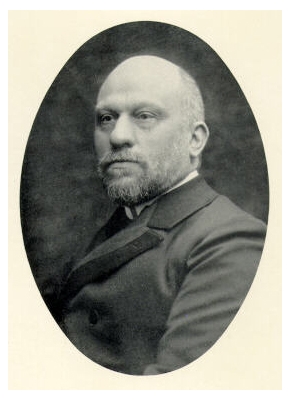 Angelo Mosso was an Italian physiologist, interested in many things but among them, blood flow and blood pressure in humans. He was born in Turin in 1846 to a father who was a carpenter by trade. Showing great promise in school, Mosso was able to attend the University of Turin and study the natural sciences. Always the consummate and prodigious researcher, over the course of his career he published more than 200 articles and books. Mosso’s work helped lay the foundation for many important (and modern) neuroscientific research methods, such as fMRI and the polygraph.