Philips recently developed a new 64 channel CT scanner that can provide high-resolution 3-D images of the body. The images it can produce are simply fabulous. Philips states that it can have sub-milimeter isotropic resolution and scan the complete human body in less than one minute with 80% less radiation exposure than traditional CT scanners. Numerous articles and pictures are starting to show up on the web. It appears that the main uses of it, at least initially, are focused on the cardiovascular system. I wonder how beneficial or useful it would be for neuroimaging? I’m not an imaging specialist but the speed and resolution of this system could lead to great improvements in neuroimaging. Even with a limited field of view, it seems like it could be beneficial to look at specific regions of the brain. There is no indication if volumetric and quantitative analyses could be performed on the images. Then again, the technology is quite new. Only one hospital in the world is actually using one of these machines.
The reported price of the machine is $2 million, which is quite reasonable. MRI machines can run upwards of $10 million. This is a technology well worth watching as it develops. We are about to enter a golden age of anatomical imaging.
Here are a few links to stories and images:


Images by Philips.
Toshiba also recently unveiled a similar machine: Link here.

 Lawrence Kohlberg developed a theory of moral development in humans that has been quite influential in emotion and moral reasoning developmental psychology. He believed that most adults reason at the 3rd or 4th stage level. A few reach the 5th and very few reach the 6th. However, people can reason at different levels at different times, with someone using stage 5 reasoning one day and stage 3 the next. However, people do tend to reason at one particular level more often than at other levels. The stages of moral development are as follows:
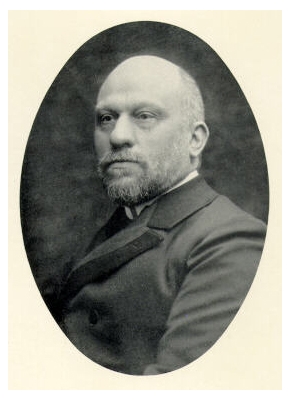 Angelo Mosso was an Italian physiologist, interested in many things but among them, blood flow and blood pressure in humans. He was born in Turin in 1846 to a father who was a carpenter by trade. Showing great promise in school, Mosso was able to attend the University of Turin and study the natural sciences. Always the consummate and prodigious researcher, over the course of his career he published more than 200 articles and books. Mosso’s work helped lay the foundation for many important (and modern) neuroscientific research methods, such as fMRI and the polygraph.


 Cajal claimed in the XX century, “Every man can, if he so desires, become the sculptor his own brain“, may well become reality in the XXI. And influence Education, Health, Training, and Gaming in the process.
