I just ran across a site that has a few medical imaging software packages. One of them is MedINRIA.
“MedINRIA aims at providing to clinicians state-of-the-art algorithms dedicated to medical image processing and visualization. Efforts have been made to simplify the user interface, while keeping high-level algorithms. Each application is called a module, and can be loaded dynamically from a single main window. MedINRIA is available for Microsoft Windows XP/Vista, Linux Fedora Core, MacOSX, and is fully multithreaded.”
Link to a description and download.

I have not tried the software yet – my MRI analysis software is FSL – but this software looks promising. Plus it runs natively on Windows, Linux (Fedora Core), and Mac OS X (FSL only runs natively in OS X and Linux – it’s a little tricky to run in Windows). Not that running in Windows is necessarily a perk – our preferred MRI processing workstation is a Mac – but many people are using Windows. If I get around to installing the software, I’ll post a review of it later. I’m always looking to user-friendly ways to analyze MRI data. Best of all, like FSL, it is free. It is based, in part, on the open-source and excellent ITK and VTK packages.
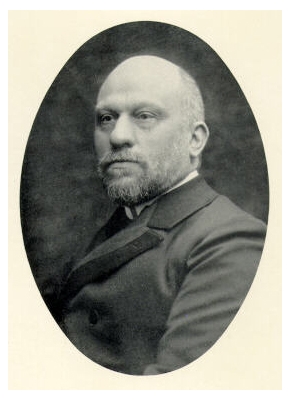 Angelo Mosso was an Italian physiologist, interested in many things but among them, blood flow and blood pressure in humans. He was born in Turin in 1846 to a father who was a carpenter by trade. Showing great promise in school, Mosso was able to attend the University of Turin and study the natural sciences. Always the consummate and prodigious researcher, over the course of his career he published more than 200 articles and books. Mosso’s work helped lay the foundation for many important (and modern) neuroscientific research methods, such as fMRI and the polygraph.

 Cajal claimed in the XX century, “Every man can, if he so desires, become the sculptor his own brain“, may well become reality in the XXI. And influence Education, Health, Training, and Gaming in the process.

